
recommended book

the comprehensive Rembrandt book with a wealth of excellent images
by Gary Schwartz
2006

DVD
Rembrandt van Rijn Bookstore
By purchasing books via any of the Amazon.com or Amazon.uk links below, you will be contributing to the growth and maintenance of this website, obviously, at no additional cost to your purchase. Other art books stores are listed below.
The prodigious talent of Rembrandt Harmensz van Rijn (ca. 1606–1669), along with his disregard for many of the artistic conventions of his day, astonished, delighted, and dismayed his contemporaries. The full gamut of their reactions is revealed in these three biographies, which were first published in the decades following Rembrandt’s death and appear here in English for the first time in their entirety.
These extraordinary documents, by German, Italian, and Dutch authors schooled in the conventions of neoclassicism, provide richly varied accounts of Rembrandt’s impact on the art world of his time. While the authors for the most part acknowledge his brilliance, sometimes grudgingly, they are wary of Rembrandt’s reliance on personal talent rather than on the rules of art. So, too, are they annoyed at his skill in manipulating the art market. Filled with colorful and amusing anecdotes, these critiques, handsomely complemented here with vivid illustrations, bring into sharper focus the originality and psychological acuity that remain Rembrandt’s trademark to this day.
An informative introduction by the scholar Charles Ford situates these texts in the art-historical context of the seventeenth century.

product description:
PREMIUM ARCHIVAL INKS result in unparalleled color fidelity and gloss level. This makes your print or poster resilient to environmental elements, thus ensuring the longevity of your artwork.
THICK QUALITY CANVAS or SATIN PHOTO PAPER achieve the most vivid colors and resolution possible. Top-of-the-line Giclee printers produce stylish prints with superior clarity and detail.

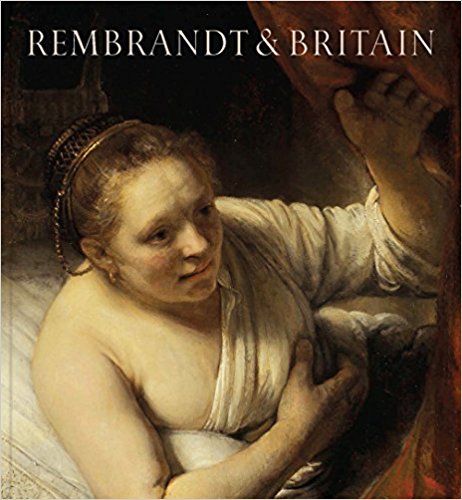
This book tells the fascinating story of Rembrandt's fame and influence in Britain. Through essays by leading scholars in the field, it explores the collecting of his artworks in the country and his impact on British artists from the seventeenth century to today. Including lavish images of paintings, drawings and prints and featuring British artists such as William Hogarth, James Abbott McNeill Whistler, Eduardo Paolozzi, and Ken Currie alongside the master.
Based on new research, Rembrandt's Naked Truth features seventeenth-century nude studies that have never before been brought together in such large numbers in The Rembrandt House Museum in The Hague. It will be the first time that Rembrandt's frank approach to drawing nudes will be examined in depth and brought to the notice of a wide audience. In the seventeenth century Rembrandt and his pupils followed the new trend of drawing from models, but Rembrandt's approach differed from his contemporaries'. His uncompromising realism was criticised - he presented reality and so did not conform to the accepted ideal of beauty at that time. When Rembrandt and his pupils drew nude models they talked about art, beauty and transience - subjects that were as sensitive in those days as they are now.
prodcut description:
Laminated durable tear resistant 24x32 HD Poster. Bold & vivid colors.
Printed on high quality 24lb photo gloss paper. Heat sealed Lamination for years of protection.
Ships same day it is purchased (weekdays)
100% Satisfaction guaranteed or full money back refund
Poster Tags: Circle of Rembrandt 16061669
Phaidon’s classic illustrated monograph on Rembrandt, updated with an elegantly crafted design for today’s burgeoning art aficionados.
Reviving a much beloved group of artist monographs from the Phaidon archive, the new Phaidon Classics bring to life the fine craftsmanship and design of Phaidon books of the 1930s, 40s and 50s. Updated with a contemporary "classic" design, full color images and new introductions by leading specialists on the work of each artist, these elegantly crafted volumes revive the fine bookmaking of the first half of the twentieth century, making Phaidon Classics instant collectors’ items.
Rembrandt (1606–1669) was arguably the finest painter of the northern Baroque period, and his intimate self‐portraits and vast historical canvases such as The Nightwatch open up the world of the seventeenth‐century Netherlands. The luxurious large‐format book highlights Rembrandt’s unique lighting techniques and rich palette.
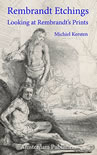
In his day, Rembrandt was better known as an etcher than as a painter. Looking at Rembrandt's prints requires a little time and patience from the viewer, but the rewards are enormous. Rembrandt moved expertly between genres, demonstrating his ingenuity, insight into human emotion and mastery of the etching medium in every image. The compositions are beautifully balanced despite a wealth of narrative detail. Every line has a purpose - nothing is accidental or left to chance.
Rembrandt Etchings is an accessible book that will guide you on your visual journey of discovery, and allow you to see why Rembrandt was the greatest of all 17th-century printmakers. You will learn a great deal about the technical aspect of printmaking, Rembrandt's choice of papers, his expertise in marketing his etchings, and prints are discussed per genre. The book contains 32 high-quality illustrations.
Written by the Dutch art historian Michiel Kersten, an expert in the field of Dutch 17th-century art.

Rembrandt: The Late Works
by Jonathan Bikker et al.
2014
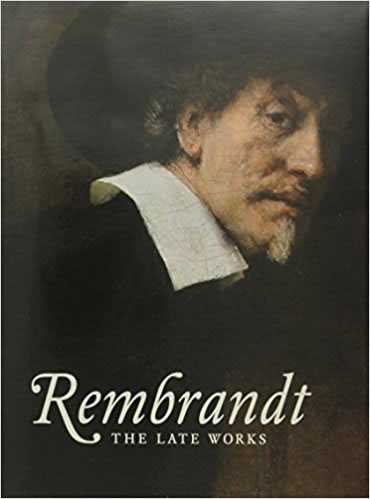
Published on the occasion of a major exhibition bringing together the best Rembrandt paintings from American collections. The great seventeenth-century Dutch artist Rembrandt van Rijn is one of the most important painters in the history of European art. This richly illustrated volume gathers some fifty of the finest paintings by the Dutch master and his followers from private and public collections across America, including the National Gallery of Art in Washington, D.C., and The Metropolitan Museum of Art, New York.
Rembrandt had an uncanny ability to depict light and shadow, and to capture the emotions of his sitters. In addition to his portraits, he is also known for historical scenes. Highlighting the authentic Rembrandts in America during the late nineteenth century’s Gilded Age, a time when American tycoons cultivated a passion for collecting European masterpieces, the book also features fifteen to twenty works that were originally attributed to the master’s hand but are now recognized as paintings by his successors, contemporary followers, and later imitators.
An introduction focusing on Rembrandt as a cultural phenomenon is followed by essays devoted to his life, the controversy associated with his workshop, and the pursuit of Rembrandt in America. Published in association with the Cleveland Museum of Art, the North Carolina Museum of Art, and the Minneapolis Institute of Arts.

Rembrandt's Century

by James A. Ganz
2013
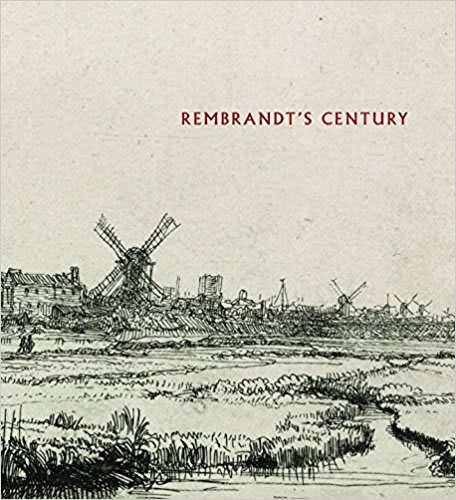
San Francisco’s Fine Arts Museums are home to an astonishing collection of graphic arts, including a vibrant holding of essential masterworks by Rembrandt—arguably his generation’s most influential artist. This stunning book places Rembrandt’s achievements in context, setting the stage primarily with prints and drawings from the turn of the 17th century and tracing the impact he had on his many followers. In a series of thematic sections, author James A. Ganz explores the rich print culture of the era, focusing on representations of artists and their world, portraiture, natural history, scenes of daily life, landscape, and subjects drawn from mythology and religion. This visually compelling survey balances the contributions of painter-printmakers like Rembrandt, Ostade, Castiglione, and Ribera against the works of such specialized graphic artists as Callot, Hollar, and Doomer. Filled with virtuosic engravings to ambient etchings, exquisite ink drawings to fanciful watercolors and more, this book illustrates the enormous range and appeal of printmaking and drawing techniques in Rembrandt’s century.
A spellbinding journey into the high-stakes world of art theft
Today, art theft is one of the most profitable criminal enterprises in the world, exceeding $6 billion in losses to galleries and art collectors annually. And the masterpieces of Rembrandt van Rijn are some of the most frequently targeted.
In Stealing Rembrandts, art security expert Anthony M. Amore and award-winning investigative reporter Tom Mashberg reveal the actors behind the major Rembrandt heists in the last century. Through thefts around the world - from Stockholm to Boston, Worcester to Ohio - the authors track daring entries and escapes from the world's most renowned museums. There are robbers who coolly walk off with multimillion dollar paintings; self-styled art experts who fall in love with the Dutch master and desire to own his art at all costs; and international criminal masterminds who don't hesitate to resort to violence. They also show how museums are thwarted in their ability to pursue the thieves - even going so far as to conduct investigations on their own, far away from the maddening crowd of police intervention, sparing no expense to save the priceless masterpieces.
Stealing Rembrandts is an exhilarating, one-of-a-kind look at the black market of art theft, and how it compromises some of the greatest treasures the world has ever known.
Rembrandt's Century
by Dennis P. Weller
2011
From the mid-1650s until his death at age sixty-three, Rembrandt van Rijn (1606–1669) generated a remarkable body of work as he searched for a new, painterly, and expressive style. His later works demonstrate his mastery, skillfulness, and exceptional ability to render the effects of light, and they have since defined his image as an artist. Rembrandt gleaned inspiration from his direct study of nature, exalting the humble, the mundane, and even the ugly, particularly in his self-portraits and works based on his everyday surroundings. His intimate pictures of figures from history, often portrayed in austere or introspective attitudes, are created with extraordinary sensitivity.
This handsome volume includes superb reproductions of some of Rembrandt’s most recognizable paintings, alongside etchings and drawings in various media that demonstrate his mastery of the graphic medium. Through a series of thematic essays, the authors draw on new research to examine Rembrandt’s iconographic, stylistic, and technical innovations and underscore how his work in one medium influenced his work in others. This captivating book is the first to focus exclusively on the paintings, drawings, and prints that Rembrandt produced during the final, most creative phase of his career.
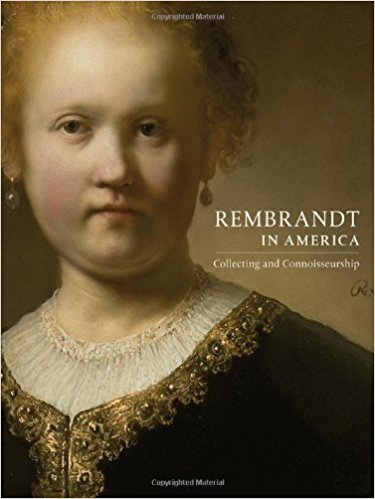
Rembrandt in America: Collecting and Connoisseurship
by Dennis P. Weller
2011
Published on the occasion of a major exhibition bringing together the best Rembrandt paintings from American collections. The great seventeenth-century Dutch artist Rembrandt van Rijn is one of the most important painters in the history of European art. This richly illustrated volume gathers some fifty of the finest paintings by the Dutch master and his followers from private and public collections across America, including the National Gallery of Art in Washington, D.C., and The Metropolitan Museum of Art, New York.
Rembrandt had an uncanny ability to depict light and shadow, and to capture the emotions of his sitters. In addition to his portraits, he is also known for historical scenes. Highlighting the authentic Rembrandts in America during the late nineteenth century’s Gilded Age, a time when American tycoons cultivated a passion for collecting European masterpieces, the book also features fifteen to twenty works that were originally attributed to the master’s hand but are now recognized as paintings by his successors, contemporary followers, and later imitators.
An introduction focusing on Rembrandt as a cultural phenomenon is followed by essays devoted to his life, the controversy associated with his workshop, and the pursuit of Rembrandt in America. Published in association with the Cleveland Museum of Art, the North Carolina Museum of Art, and the Minneapolis Institute of Arts.
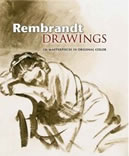
This deluxe hardcover edition features drawings by the Dutch master from the collections of more than 20 European and American museums. Beautifully produced in a generous format on high-quality paper, this volume spans the artist's prolific career and includes superb examples of landscapes, biblical vignettes, figure studies, animal sketches, and portraits.
With international attention focused on the 400th anniversary of Rembrandt van Rijn's birth, the world's leading Rembrandt expert weighs in with a penetrating—and accessible—examination of the Dutch master's life and art from both the biographical and the art historical perspective.
Rembrandt was an esteemed artist in his own time as well as in the present, yet there is much debate over how many paintings and drawings can really be attributed to him, and popular scholastic opinion varies widely. In his lively text, accompanied by 700 full-color illustrations, Gary Schwartz addresses the central controversies, providing art historians, students, and art lovers with essential new insights to help clarify the mysteries surrounding the great painter.
Rembrandt & Caravaggio
by Taco Dibbits, Duncan Bull, Volker Manuth, Carel van Tuyll van Serooskerken, Margriet van Eikema Hommers and Ernst van de Wetering2006
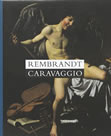
Rembrandt - Caravaggio highlights the two geniuses of baroque painting: Rembrandt, the pre-eminent artist of the Dutch Golden Age, and his Italian counterpart Michelangelo Merisi (also known as Il Caravaggio). Both artists are considered revolutionary innovators in Northern and Southern European art, respectively. With their origins in different painting traditions, each developed an original and striking visual language. The juxtaposition in pairs of paintings by the two artists intensifies the comparison of their work.
Although they never met—Caravaggio (1571–1610) died four years after the birth of Rembrandt van Rijn (1606–1669)—many parallels can be drawn between the two master painters and their oeuvres. This is the first publication to comprehensively compare the works of Rembrandt with those of Caravaggio. Exploring the use of contrasting colours and chiaroscuro, both artists achieved unexpected realistic detail.
Unsettling to their contemporaries, the realism of the works of Rembrandt and Caravaggio remains exceptionally compelling to this day. Both painters scrutinised humanity in their own way, amplifying the power and enigmatic qualities of major human themes, such as love, religion, sexuality and violence. Rembrandt and Caravaggio changed not only the course of painting, but also our perception of the world.
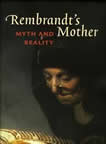
About half of the work Rembrandt did in Leiden consisted of paintings, etchings and drawings showing older people. In these works an old woman is frequently portrayed who has traditionally been held to be Rembrandt's mother, Neeltje Willemsdr. van Zuijdtbroeck. Whether Rembrandt really depicted her or whether this is a myth which has persisted for centuries is still not clear. This book discusses the creation of this myth, which although not firmly based on facts, has been an essential part of Rembrandt's image for centuries.
The works for which Rembrandt's mother was the model and which are reproduced in this book give an idea of the young artist's iconographic interests. For instance, Rembrandt depicted her as a prophetess, attentively reading a book. Sometimes she plays an active role in religious or allegorical pictures. A similar model can also be recognized in paintings by Rembrandt's friend Jan Lievens and his first pupil Gerrit Dou. By showing the paintings of these young masters, the book examines the artistic relationships between them. It offers a unique opportunity to compare early, closely related works and to gain a clearer picture of the collaboration among these artist.
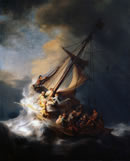
product description:
PREMIUM ARCHIVAL INKS result in unparalleled color fidelity and gloss level. This makes your print or poster resilient to environmental elements, thus ensuring the longevity of your artwork.
THICK QUALITY CANVAS or SATIN PHOTO PAPER achieve the most vivid colors and resolution possible. Top-of-the-line Giclee printers produce stylish prints with superior clarity and detail.
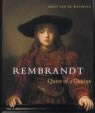
Rembrandt is one of the great innovators in art: his unique oeuvre is the result of a lifelong artistic quest. The monograph will trace this search—and the many roads along which it led him—in a manner that makes it accessible to a wide public. The Rembrandt Research Project's most recent discoveries will throw new light on Rembrandt as a creative genius and as the driving force in an extraordinarily productive workshop. We get a glimpse of Rembrandt's "laboratory"—a vibrant centre of artistic activity under his inspiring leadership. And, of course, there will be a special focus on the period from 1639 to 1658, when Rembrandt lived and worked in the Rembrandt House.
This monograph, which contains contributions by Ernst van de Wetering and other prominent Rembrandt experts, is published in conjunction with the exhibition Rembrandt—The Quest of a Genius in Museum Het Rembrandthuis and the Berlin Gemäldegalerie. This retrospective of Rembrandt's work will be one of the main events of the Rembrandt year 2006.
Rembrandt's Landscapes
by Boudewijn Bakker, E. Melanie Gifford, Huigen Leeflang, Cynthia Schneider et al.2006
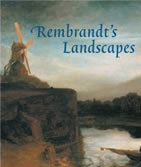
Rembrandt was an exceptional seventeenth-century painter in that he did not limit himself to one genre. He challenged the artistic standards in all genres, including that of painting landscapes. Rembrandt's earliest landscapes were not so much realistic depictions of the world around him, which was a typical characteristic of his drawings, but representations of imaginary surroundings. In his studio he combined landscape elements from various sources, completely from his imagination. In other landscapes Rembrandt stayed closer to home: these paintings show more local features, probably inspired by the realistic motifs he sketched during his strolls in the surroundings of Amsterdam.
This book gives a comprehensive picture of Rembrandt's development in the genre of landscapes, both in his paintings and drawings and in his etchings. It contains in-depth discussions of questions relating to the meaning, technique and position of Rembrandt's landscapes in his oeuvre.
To mark the Rembrandt Year, all of his landscapes will be exhibited together for the first time in Stedelijk Museum De Lakenhal.
Rembrandt's Bankruptcy : The Artist, His Patrons, and the Art World in Seventeeth-Century Netherlands
by Paul Crenshaw2006
This study examines the causes, circumstances, and effects of the 1656 bankruptcy of Rembrandt van Rijn. Following a highly successful early career, Rembrandt's idiosyncratic art and lifestyle came to dominate his reputation. His evasion of responsibility to his creditors was so socially disreputable that laws in Amsterdam were quickly altered. The poor management of his finances magnified other difficulties that he had with family, paramours, friends, neighbors, and patrons. Collectively, Rembrandt's economic and social exigencies affected his living and working environment, his public station, and his art. This study examines all of these aspects of Rembrandt's bankruptcy, including his marketing practices, the appreciation of his work, and his relations with patrons, in addition to the details of the bankruptcy itself. Several patterns of short-sighted decision-making emerge as Rembrandt conducted his affairs within a constantly changing framework of relationships, a shifting set of obligations, and evolving artistic pursuits.
The Mauritshuis has ten paintings by Rembrandt. The most famous is undoubtedly Anatomy Lesson of Dr Nicolaes Tulip but just as popular are Simeon's Song of Praise, Portrait of an Old Man and Self-Portrait, one of the last which the Master painted. For those wishing to learn more about these artworks, there is now Rembrandt in het Mauritshuis. In this playfully designed book the paintings and their distinctive features are conveyed in an accessible manner. A large number of detailed images capture Rembrandt's extraordinary painting technique from close by: the quick brushstrokes, the crisscrossing in wet paint and the carefully placed dabs and jabs. The recent restoration of three Rembrandts at the Mauritshuis also receives special attention.
This is the second in a series of publications highlighting the most striking aspects of the Mauritshuis' distinguished collection. The first to be published featured the work of Johannes Vermeer.
Uylenburgh & Son; Art and Trade in Rembrandt's Days
edited by Friso Lammertse and Jaap van der Veen2006
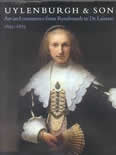
Until the early seventeenth century, the distribution of paintings and other art works was in the hands of the artists, but after that to an increasing extent it was taken on by specialists. The most important art dealers were active in Amsterdam, the art centre par excellence. Hendrick Uylenburgh and his son Gerrit Uylenburgh were leading figures among these dealers.
The Uylenburghs, father and son, ran an art business and at the same time headed a painters' workshop where renowned artists worked. Rembrandt worked for this business from 1631 to 1635. He painted countless commissioned portraits and as well as historical paintings and tronies also did grisailles and etchings. While working for this business he met Saskia Uylenburgh, a cousin of the art dealer, whom he married in 1634.
The book Uylenburgh & Son provides insight into the nature and significance of the Uylenburghs' enterprise and also discusses their investors and customers. A great deal of new material has been found about the Uylenburgh family.

In the Print Room of the Rijksmuseum there are about sixty original drawings by Rembrandt van Rijn, ranging from a self-portrait and figure and genre studies to biblical scenes, landscapes, nudes and animals. Although Rembrandt is famous mainly as a painter, this splendid collection of drawings shows that he was also an unrivalled master of the art of drawing. In this dossier all of the drawings in the Rijksmuseum are reproduced in colour for the first time and described in texts accessible to a wide public.

Portrait the captain and the lieutenant among their civil quards must have been the approximate assignment given to Rembrandt van Rijn (1606–1669). Although this commission differed little from other commissions for civil quard group portraits, The Nightwatch painted in 1642, is more exciting and original than any of the others of thi genre.
This Dossier discussus Rembrandt's masterpiece in great detail. Everything is addressed, from the commission Rembrandt received to his unequalled painting technique and from Rembrandt's exceptional handling of light to the painting's reputation down through the centuries.
The Rembrandt House: A Catalogue of Rembrandt Etchings
by Eva Ornstein-van Slooten and Marijke Holtrop2006
The house on the Jodenbreestraat in Amsterdam, where Rembrandt lived for more than 20 years, was opened as a museum in 1911. The museum concentrated itself—with great success—on bringing together Rembrandt's graphic work.
A comprehensive illustrated catalogue of this collection is now being published for the first time. The complete collection of the Rembrandthuis, comprising more than 250 etchings as well as a number of drawings and paintings, have been included in the book. The descriptions are arranged lucidly by subject and the different chapters are all preceded by brief general introductions. Depictions and complete technical details are included of all the works as well as more substantial descriptions of a large number of them.
The book includes an extensive introduction about the history of this singular house and about the origins of the collection as well as the descriptive catalogue section. The technique of etching and Rembrandt's own specific experiments are also described.
Drawn to the Light offers a fresh way of viewing this selection of Rembrandt's familiar masterpieces as well as the religious characters and events that inspired them. The book features eighteen of Rembrandt's paintings, each accompanied by an original poem that mines the religious and artistic expressions of the painting.
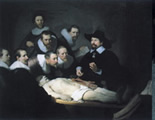
During his life Rembrandt painted four group portraits, which have all become world-famous. Everybody knows The Night Watch, The Syndics of the Drapers' Guild and The Anatomy Lesson of Dr Nicolaes Tulp. Part of the fourth work, The Anatomy Lesson of Dr Joan Deyman, was lost in a fire in the eighteenth century. However, the greater part of the work survived and can also be seen in this richly illustrated, compact publication.
In the seventeenth century a guild or a corps would often commission a group portrait. At that time the Netherlands was at the height of its prosperity, and it added to a person's status to be a member of a guild or corps. An important Dutchman like Frans Banning Cocq or Nicolaes could gain even more prestige by having a portrait painted of himself in the midst of the group to which he belonged – for instance by an artist like Rembrandt, who was famous even then. Because of his exceptional working method, these paintings are not only splendid portraits, but also magnificent historical depictions of the guilds and corps of the seventeenth century.
Rembrandts Groupportraits shows all these well-known works and also devotes attention to Rembrandt's working method in comparison with that of his contemporaries, and the creation of his group portraits.
One of the most fascinating aspects of Rembrandt's extraordinary artistic career is his suite of brooding half-length portraits of religious figures from the late 1650s and early 1660s. Painted during a difficult time in the artist's life—when he no longer enjoyed a ready market for his works and may have turned to his deep religious convictions for solace—these images are among the most evocative Rembrandt created. For years scholars have debated whether these paintings were intended as a series, yet until now these works have, unbelievably, never been shown together.
An exhibition by the National Gallery of Art and this accompanying catalog assemble seventeen of the paintings for the first time, finally giving the powerful images their due. Many of these subtle and wondrous paintings have been identified as images of apostles and evangelists, but among them are also representations of Christ, the Virgin, and still-unidentified saints and monks. In Rembrandt's typical fashion, the men and women in these portraits peer out of the dark recesses of dimly lit interiors as though burdened by the weight of their spiritual and emotional concerns. Yet recent archival research has raised questions about their attribution, the relationships among the paintings, and, in a broader sense, Rembrandt's life and career—issues addressed by the contributors to this volume. With its lavish color images and state-of-the-field research, Rembrandt's Late Religious Portraits will make a profound contribution to the understanding of this unique and provocative body of work.
The Biblical Rembrandt presents the human Rembrandt in the context of his faith. That faith can be studied only by an intense look at this paintings, etchings, and drawings depicting biblical persons, scenes, and moments. About Rembrandt's life, we know very little that is certain, but he has left us abundant testimony of his sensitive reading of the Bible. Written from the perspective of a biblical specialist who has pored over Rembrandt's testimony, Durham writes not for the art historian, but for those who love the Bible, for those who love Rembrandt, and for those who want to know more about the meeting of this Dutchman and his biblical text. Durham confesses he has lived with the (changing) canon of Rembrandt's works for more than forty years, with the biblical texts he loved open before me. This book is the summary of that experience. Not every work of Rembrandt based on the Bible is discussed: that would have required commentary on more than 900 works. Durham has selected his favorites, the ones that seem to him most reflective of Rembrandt's faith, about 130 works in all. Each of these paintings, etchings, and drawings is reproduced in the context in which it is described, the paintings in full color. Where important details are difficult to see, they are isolated, and enlarged as necessary. In his biblical works Rembrandt invites us to read the Bible just as he read it, in personal terms: flawed, as he was; reaching, as he did; and experiencing the Bible as a book about ourselves.
A Descriptive Catalogue Of The Etched Work Of Rembrandt Van Rhyn
by Charles Henry Middleton-Wake2005

REPRINT of the 1878. Oversized octavo. Book lx, 341 p. 12 plates. London, J. Murray. The rarest and certainly one of the most important early catalogue raisonnes of Rembrandt's etchings. Middleton describes 329 works he considers authentic and 30, which he rejects, all in great detail, with particular attention to states. He also provides detailed, complex, and scholarly arguments justifying his acceptance or rejection of each questionable piece. He was the first to do so and thus open a new era in the study of these prints. Also includes 12 plates
Rembrandt: Portraits in Print is the first monograph devoted to Rembrandt's etched portraits of himself and his contemporaries. Between 1633 and 1665, Rembrandt etched less than two dozen formal portraits, yet this small body of work includes some of his most finely crafted and widely sought-after prints. Rembrandt depicted influential preachers of the Remonstrant, Reformed and Mennonite faiths as well as prominent citizens such as the tax administrator Jan Wtenbogaert, the wealthy connoisseur Jan Six, the physician Arnout Tholinx and the landscape painter Jan Asselijn. Most of these men participated in a circle of artists, poets and patrons who thought of themselves as a "Dutch Parnassus." For this community of art lovers, the celebration of individual character and accomplishment, in products ranging from imposing portrait sculptures to witty occasional verses, was a central preoccupation. In this context, Rembrandt's portrait prints construct nuanced personal tributes to individuals who appreciated both their allusive content and their pictorial finesse. At the same time, Rembrandt had to compete in a market populated by professional printmakers and publishers for whom celebrity portraiture functioned as a lucrative commodity. In a series of ambitious self-portraits, he stakes his claim to artistic excellence and personal fame. This book brings together contextual evidence such as preparatory studies, inscribed copies, and literary responses to illuminate the creation and reception of Rembrandt's etched portraits. His contribution to graphic portraiture emerges as a unique blend of innovative technique, thoughtful characterization, emulation of artistic tradition and bold competition with contemporary trends.
Until now dress has played only a subordinate role in the research of Rembrandt's paintings, despite the fact that few artists are as intensively studied as this Dutch master. The lacuna is all the more surprising since Rembrandt obviously delighted in rendering clothes, which, for him, not only communicated the character and social status of his sitters but also clarified his narratives and heightened the drama in his historical pieces. Here, Marieke de Winkel offers a fascinating and much-needed study of dress and costume in the works of Rembrandt.
De Winkel shows us how focusing on apparel opens a new line of inquiry into Rembrandt's paintings, one which is symbolically and iconographically richer than previously imagined. This approach, which has not been fully acknowledged by art historians nor developed by dress historians, deepens our understanding of Rembrandt's expression as well as the cultural and historical context of the Dutch seventeenth century. De Winkel proves the merits of the approach here with her close readings of Rembrandt's paintings and the contemporaneous connotations of the clothes he depicted. She demonstrates convincingly that clothes do much more than help date the paintings; they are instead integral to the program of representation.
Rembrandt changed the course of art history not only as a painter but also as a draftsman and printmaker. His output of some 300 etchings and drypoints represents a lifelong commitment to printmaking unequaled by any other seventeenth-century painter and comparable only to Picasso in our own time. Rembrandt's Journey unfolds the richness and diversity of Rembrandt's career as an etcher in the context of his paintings and drawings. Illustrated with nearly 200 works in all three media, this book traces the remarkable evolution of Rembrandt's art over four decades, from the robust physical energy of his early productions to the breadth, simplicity and meditative beauty of his later work. It establishes new and important connections among these works and among the three media that the artist explored throughout his career. It encompasses the wide range of his vision, from the tragic and spiritual to the earthy and comic. And it gives full due to Rembrandt's narrative sensibilities, showing how he endowed his figures (particularly in biblical scenes) with unprecedented psychological nuance and vividness. Published to accompany the first comprehensive American survey of his work in decades, Rembrandt's Journey offers a fresh, authoritative view of this endlessly familiar, yet still unknown, artist. Essays by Clifford S. Ackley, Ronni Baer, Thomas E. Rassieur and William W. Robinson.
From 1870 to 1935, the first true catalogues raisonnés of Rembrandt's paintings were produced, incorporating the results of individual connoisseurs' evaluations of authenticity and quality. This book, the first full-length study of this scholarly corpus, concentrates on the written connoisseurship of Wilhelm von Bode, Abraham Bredius, Cornelis Hofstede de Groot, and Wilhelm Valentiner, whose articles and catalogues first shaped the modern conception of Rembrandt as a painter. In addition to analyzing their written work, Scallen addresses the social context of their connoisseurial practices, as shaped by their museum careers and their relationships with dealers and collectors.
Rembrandt's Jews
by Steven Nadler
2003
There is a popular and romantic myth about Rembrandt and the Jewish people. One of history's greatest artists, we are often told, had a special affinity for Judaism. With so many of Rembrandt's works devoted to stories of the Hebrew Bible, and with his apparent penchant for Jewish themes and the sympathetic portrayal of Jewish faces, it is no wonder that the myth has endured for centuries.
Rembrandt's Jews puts this myth to the test as it examines both the legend and the reality of Rembrandt's relationship to Jews and Judaism. In his elegantly written and engrossing tour of Jewish Amsterdam—which begins in 1653 as workers are repairing Rembrandt's Portuguese-Jewish neighbor's house and completely disrupting the artist's life and livelihood—Steven Nadler tells us the stories of the artist's portraits of Jewish sitters, of his mundane and often contentious dealings with his neighbors in the Jewish quarter of Amsterdam, and of the tolerant setting that city provided for Sephardic and Ashkenazic Jews fleeing persecution in other parts of Europe. As Nadler shows, Rembrandt was only one of a number of prominent seventeenth-century Dutch painters and draftsmen who found inspiration in Jewish subjects. Looking at other artists, such as the landscape painter Jacob van Ruisdael and Emmanuel de Witte, a celebrated painter of architectural interiors, Nadler is able to build a deep and complex account of the remarkable relationship between Dutch and Jewish cultures in the period, evidenced in the dispassionate, even ordinary ways in which Jews and their religion are represented—far from the demonization and grotesque caricatures, the iconography of the outsider, so often found in depictions of Jews during the Middle Ages and the Renaissance.
Reframing Rembrandt: Jews and the Christian Image in Seventeenth-Century Amsterdam
by Michael Zell2002
This richly detailed study reconceptualizes a striking but enigmatic moment in Rembrandt's art from the 1650s—one of the artist's most prolific and creative periods. Michael Zell identifies a significant theological shift in Rembrandt's use of religious imagery and interprets this shift in light of the unique religious and social conditions of seventeenth-century Amsterdam. Rembrandt's biblical art has generally been regarded as the embodiment of a Protestant aesthetic. By looking closely at the artist's relationship with his patron Rabbi Menasseh ben Israel and the ideas of a group of "philosemitic" Protestants with whom the rabbi was engaged in an apologetic dialogue, Zell deepens and complicates our understanding of Rembrandt's sacred art from this period.

If Rembrandt's career had ended in 1631, before the 25-year-old artist moved from his native town of Leiden to the booming metropolis of Amsterdam, how would history remember him? This is the theme of Rembrandt Creates Rembrandt. Rembrandt's work in Leiden was already extraordinarily creative and intensely dramatic. In the years 1629 to 1631, the artist struggled to master different genres and techniques. He worked with Jan Lievens and took his first known pupil, Gerrit Dou. By the time he decided to seek his fortune in Amsterdam, his work had already achieved a unique and profound sense of color, light, and human emotion. Rembrandt Creates Rembrandt includes contributions by Alan Chong, Arthur K. Wheelock Jr., Christopher White, and Mariët Westermann.
Rembrandt famously had three women in his life: Saskia, the burgomaster's daughter, who died at 30; Geertje Dircks, the housekeeper with whom he had a bitter quarrel; and Hendrickje Stoffels, the servant girl who bore him a child and loyally stood by him in bankruptcy. Part of the mystique of his art, fueled by its emotional depth, is that his female figures are portraits of members of his household. The truth of the matter is more cloudy, though, since no documented portraits of the two servants exist. But scholars are interested in many other aspects of Rembrandt's women, as this exceptional book explains in six lively essays and detailed discussions of 140 works. They range from major paintings (Susanna and the Elders, Danae) to intimate etchings and drawings of women in domestic settings.
The essays explore a variety of issues, ranging from the seventeenth-century Dutch notion of female beauty (was flab more attractive then?) to the significance of handkerchiefs held by women in portraits of the era. A key theme in these pages is the way Rembrandt's transformation of traditional mythological and biblical scenes featuring nude women created a new level of erotic immediacy. Scholars have unearthed some interesting answers to questions like, What sort of woman in seventeenth-century Amsterdam would allow herself to be portrayed nude in a work of art?
Rembrandt's intriguing painting technique has stirred the imagination of art lovers during his lifetime and ever since. In this book, Rembrandt's pictorial intentions and the variety of materials and techniques he applied to create his fascinating effects are unraveled in depth. At the same time, this "archaeology"of Rembrandt's paintings yields information on many other levels.
In art-historical research, the work of art as a material object is used increasingly as an important source of information about the painting itself, as well as about historic studio practice in general. The range from practical workshop devices to aesthetic and art-theoretical matters combined in this book offers a view of Rembrandt's daily practice and artistic considerations, while simultaneously providing a more three-dimensional image of the historical artist.
OUTSTANDING!
Painters, laymen, and just about anyone interested in painting technique of the great masters cannot be without this richly illustrated and finely written volume.
In 1639, Rembrandt paid an enormous sum for a grand, patrician residence in Amsterdam, today's Rembrandthuis. Rembrandt van Rijn was a fanatical collector: he spent thousands of guilders on a unique array of art and curiosities. Eventually, his passion brought him to the brink of financial disaster. By 1656 he was bankrupt and forced to sell his house and his collections. For the auction of his property an inventory was drawn up from which it is now possible to reconstruct his collection and the way he arranged it in his house. In this richly illustrated publication, Rembrandt's activities as a collector are presented to a broad public for the first time.

This extensively illustrated volume provides the definitive account of Rembrandt`s etchings and their significance within the artist`s larger body of work. With eloquence and deep insight, Christopher White analyzes the technical, stylistic, and iconographic features of selected etchings, traces their close relationship with the artist`s drawings, and reveals how Rembrandt made the medium uniquely his own.
Rembrandt by Himself
by Quentin Buvelot & Christopher White
1999
Rembrandt van Rijn (1606–1669) may not have been a handsome man, but he was an exceptional painter of himself. This sumptuous catalog, published to coincide with the exhibition of his self-portraits at the National Gallery in London, has glossy reproductions of all the paintings and etchings from the show, plus copies of works that are long lost and some not released by the galleries or private collectors who own them. The images are all thoroughly annotated to elucidate their history, and the scholarship is impressive, being mostly drawn from the Rembrandt Research Project, which for years has been working with a combination of x-ray technology and patient research to ascertain the age of the pictures and confirm the identity of their painter. This is not easy work: Rembrandt had many pupils, and he encouraged them to copy his own self-portraits as practice, leading to the unusual situation of a host of Rembrandt self-portraits not actually painted by the master himself. The findings of the project have been contentious, with paintings unexpectedly relegated or elevated through reappraisal. What shines through, though, is the sheer diversity of Rembrandt's genius: the early paintings and etchings in which he turns to a mirror to study expression; the periods of dressing up variously as an Oriental potentate, a soldier, an artisan, and Saint Paul; and the famous trilogy of self-portraits painted in his final year that seem to show a man old beyond his years. The catalog also contains a selection of works by his pupils Gerrit Dou and Samuel van Hoogstraten and essays by Rembrandt scholars that seek to revise the somewhat romantic conceit that the series is some sort of spiritual autobiography. Rembrandt by Himself, an intelligent and resourceful accompaniment to the exhibition, will continue to transport the reader long after the portraits in the exhibition have returned to their respective homes.
—David Vincent, Amazon.co.uk
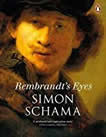
In Rembrandt's Eyes, Simon Schama—the leading historical craftsman of our era, with a career-long commitment to Dutch history—succeeds with consummate skill in bringing the heroic painter of such masterpieces as The Night Watch and Portrait of Jan Six vividly to life. Returning to the bustling Dutch world with which he first made his reputation in the bestselling Embarrassment of Riches (1987), Schama re-creates Rembrandt's life and times with all the verve and panache of a historical novelist—while never for an instant losing his scrupulous grip on recorded fact and detail.
Rembrandt's 'Bathsheba Reading King David's Letter' (Masterpieces of Western Painting)
by Ann Jensen Adams1998
"Ann Adams's introduction deftly presents current Rembrandt studies and critical presentation of the following essays, making the connections and distinctions in theit approaches. For students, this sampling of approaches with respect to a single art work is a rich opportunity to gain access to the discipline of art history, which is, by its definition and essence, interdisciplinary in material and methodology." Amy Golahny, Historians of Netherlandish Art Newsletter "...essential reading not only for their respective pictures, but for their respective artists...the essays work collectively to round out understanding of a key work and remind us of why scholarly attention has created a canon."
—Renaissance Quarterly
In recent years Rembrandt's oeuvre and influence have been hotly debated. A number of paintings hitherto said to be his, have been reattributed by some scholars to pupils or even to obscure followers, while other works have been radically reinterpreted. This lavishly illustrated book, containing essays by some of the world's leading scholars on seventeenth-century Dutch art, is the first critical review of the present state of Rembrandt studies finds itself in as a result.
A new tradition of painting grew up in the Netherlands in the seventeenth century, in which artists were encouraged to explore the limits of their own capabilities. Rembrandt's portraits and other portraits and other paintings laid bare the inner life of his human and religious subjects in a way equalled by none. Greatly interested in everything he saw, Rembrandt set down the landscapes, and the events that took place in his own surroundings, in works that make him one of the greatest artists the world has ever known.
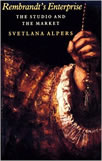
Drawing on and furthering the enterprise of Rembrandt scholars, who have been reinterpreting the artist and his work over the past 25 years, Alpers presents new considerations about Rembrandt's handling of paint, his theatrical approach to his models, his use of his studio as an environment under his control, and his relationship to those who bought his work. Her study is timely in light of recent research showing that well-known works attributed to Rembrandt are by followers instead. Alpers developed her text from a lecture series, and the prose gains readability by retaining some of the flavor of a talk.
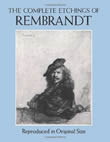
Over 300 works—portraits, landscapes, biblical scenes, allegorical and mythological pictures and more—reproduced in full size directly from a rare collection of etchings famed for its pristine condition, fresh, clean impressions, rich contrasts and brilliant printing, With detailed captions, a chronology of Rembrandt's life and etchings, a discussion of the technique of etching in his time and an excellent bibliography.
It is relatively rare to find a world scholar writing in such a jargon-free and accessible way about the complexities of a historically significant man and period. Schwartz's explanation of the various ways in which art historians go about interpreting pictures will help readers feel less threatened by any particular dogma, and may even give some the courage to join in the art history detecting game. He presents a Rembrandt with all the flaws and quirks he had, telling an engrossing story that even those who know something about the artist will find hard to put down. Cream-colored frames around each page make the book visually inviting. Each chapter begins with a large illuminated capital, and the reproductions are placed for their visual variety as well as for illuminating points in the text. Many are full page and all are finely printed. Two foldouts of etchings give readers a chance to see up close the magic of Rembrandt's acid-bitten line. This is the very model of a modern monograph.
—Kenneth Marantz, Art Education Department, Ohio State University, Columbus
Copyright 1992 Reed Business Information, Inc.
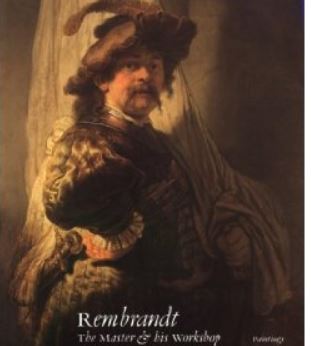
Together with Rembrandt: The Master and his Workshop (Drawings and Etchings), this book serves as the catalogue for a major exhibition of Rembrandt's paintings, drawings, and etchings opening at the Altes Museum in Berlin and the Rijksmuseum in Amsterdam in 1991. Paintings and etchings from this exhibition will later be on display at the National Gallery in London; the drawings will be shown at the British Museum. In this volume on the paintings, prominent experts discuss Rembrandt's life, his technique, the organization of his workshop, and the history of critical response to him. The authors then present detailed studies of 51 paintings definately attributed to Rembrandt, from his earliest biblical subjects to the last self-portrait. The final section of the book discusses the work of Rembrandt's pupils, including Ferdinand Bol, Gerrit Dou, and Nicolaes Maes. Paintings once assumed to be by Rembrandt are attributed to these pupils and are related to other works they have done.
Works from various periods in Rembrandt's artistic development accompany a study of the artist's life and stylistic characteristics of his paintings and drawings.
Rembrandt`s Landscapes
by Cynthia Schneider1990
Rembrandt's landscape paintings have always been difficult to understand and attribute, for their fantastic imagery, exotic architecture, and dramatic motifs set them apart from the mainstream of seventeenth-century Dutch landscapes. In this beautiful book, Cynthia P. Schneider presents for the first time an assessment of Rembrandt's painted landscapes, explaining the unusual nature of the images, the artistic heritage from which they came, and the meaning expressed in them.
"Cynthia Schneider's delight in the detailed examination of individual pictures gives [the book] momentum. . . . The arguments expressed in these nineteen catalogue entries will have to be taken into account seriously in all subsequent discussions of this aspect of Rembrandt's art. Further, we owe Schneider a debt for having made a considerable contribution to the definition of Rembrandt's activity as a landscapist."
—Ivan Gaskell, Apollo Magazine
A supreme master of landscape drawings, Rembrandt's extraordinary draftsmanship possessed a vitality and power that few artists ever achieve. This excellent volume displays in sharp, quality reproductions 60 authentic landscapes chosen from the great facsimile editions.
A supreme master of landscape drawings, Rembrandt's extraordinary draftsmanship possessed a vitality and power that few artists ever achieve. This excellent volume displays in sharp, quality reproductions 60 authentic landscapes chosen from the great facsimile editions.
A supreme master of landscape drawings, Rembrandt's extraordinary draftsmanship possessed a vitality and power that few artists ever achieve. This excellent volume displays in sharp, quality reproductions 60 authentic landscapes chosen from the great facsimile editions.
rembrandt bookshop / museums with rembrandt paintings / the complete vermeer website / rembrandt links
copyright@2018 contact
This collection brings together art historians, museum professionals, conservators, and conservation scientists whose work involves Rembrandt van Rijn and associated artists such as Gerrit Dou, Jan Lievens, and Ferdinand Bol. The range of subjects considered is wide: from the presentation of convincing evidence that Rembrandt and his contemporary Frans Hals rubbed elbows in the Amsterdam workshop of Hendrick Uylenburgh to critical reassessments of the role of printmaking in Rembrandt's studio, his competition with Lievens as a landscape painter, his reputation as a collector, and much more. Developed from a series of international conferences devoted to charting new directions in Rembrandt research, these essays illuminate the current state of Rembrandt studies and suggest avenues for future inquiry.